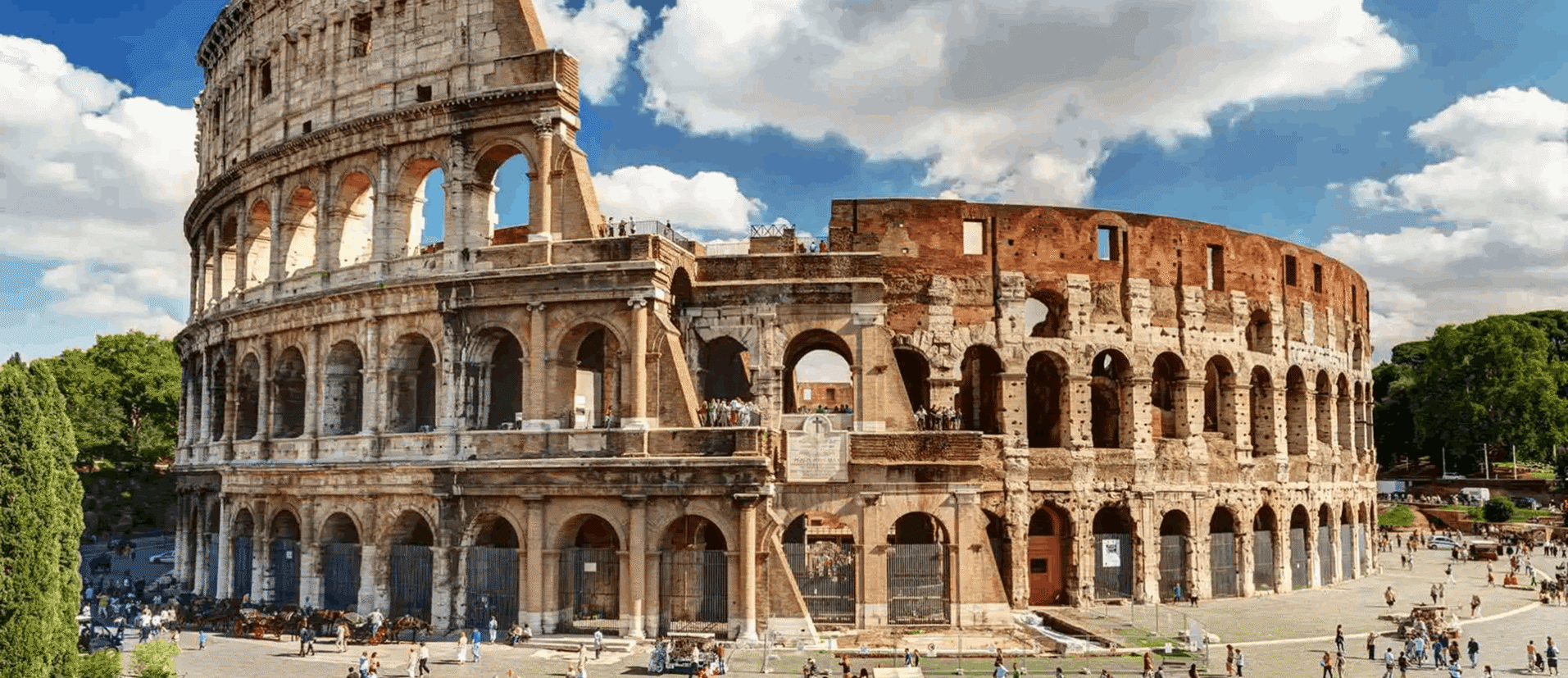
Colosseum Tours in Rome
Official Colosseum Tours in Rome
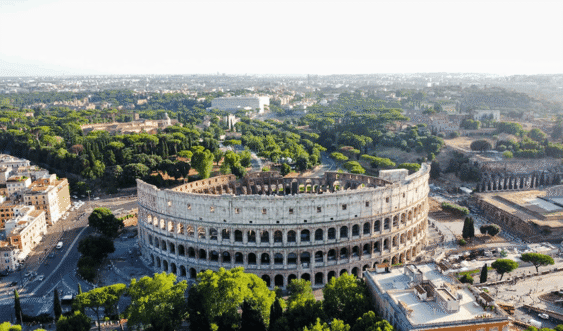
Colosseum tours in Rome provide a full range of experiences for visiting the iconic Roman monument and Italy’s most celebrated ancient arena. The Colosseum, known as the Flavian Amphitheater, welcomes 5 million annual tourists, therefore pre-planning to this monumental landmark is essential.
Whether you’re looking to book the best Colosseum tours, purchase skip-the-line Colosseum tickets for a hassle-free experience, or seek advice on how to tour the Colosseum yourself, you have come to the right place.
Looking for the best places to eat in Rome and throughout Italy? Cooking Italy offers award-winning food tours, wine tasting experiences and cooking classes in Rome.
Recommended Colosseum Tours
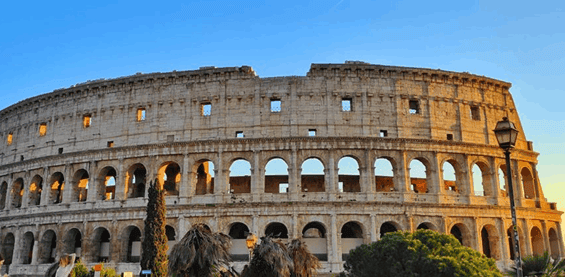
Express Colosseum Tour
Step into the past of the Roman Empire with a 1-hour skip-the-line Colosseum Tour . Trace the path of emperors as you uncover the grandeur of the Flavian Amphitheatre’s 1st and 2nd tiers.
-

 1hr
1hr -
 Rome
Rome
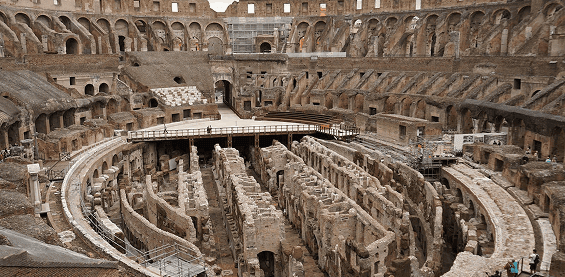
Colosseum Arena Floor & Ancient Rome Tour
Enter an exclusive section of the Colosseum and witness a partially reconstructed portion of the arena floor. Gain entry through the Gladiator’s Gate, providing a unique perspective on the amphitheater. Enjoy perks that regular ticket holders don’t get with skip-the-line access and three areas of the Colosseum. After exploring the Arena in depth with your expert guide, you’ll head over to the Roman Forum and climb Palatine Hill where you can imagine what downtown ancient Rome was like.
- 3hrs
- Rome
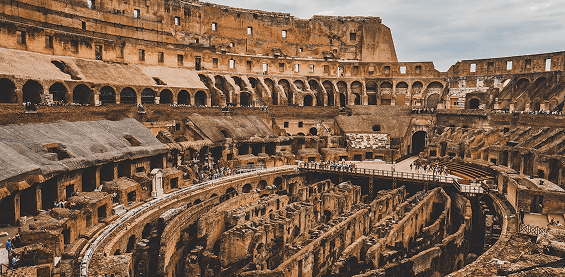
Colosseum Underground Tour with Roman Forum and Palatine Hill
Experience the Colosseum like never before, with an exclusive VIP tour that takes you deep into its underground secrets. This Colosseum underground tour provides privileged access, to sections of the Colosseum not available with a standard ticket, including the Colosseum Underground tunnels, Gladiator’s Arena and dungeons. This exclusive experience is the most in demand colosseum tour, therefore bookings for the underground must be made well in advance of your trip to Rome.
- 3hrs
- Rome
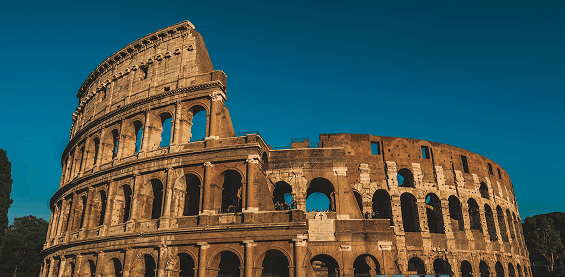
Privileged Entrance Colosseum Tour with Palatine Hill & Roman Forum
Visit the Colosseum, the Palatine Hill and Roman Forum during this 3 hour guided tour. Your local expert guide, will lead you into the Colosseum and around Ancient Rome, with privileged entrance to admire the ruins where the true power of the Roman Empire once lay and learn about its 2000 years of History.
- 3hrs
- Italy
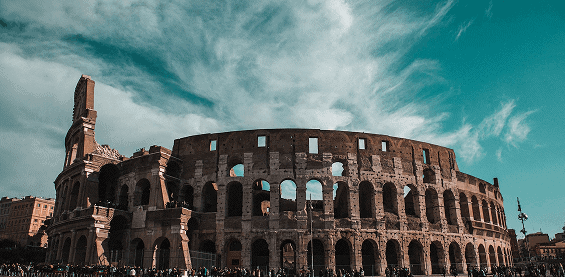
Private Colosseum Tour
For the ultimate Colosseum experience, join us on an exclusive 3 hour private Colosseum tour, including the Palentine hill and Roman Forum. With reserved skip the line tickets, you will bypass the crowds and long ticket waiting, with direct access. Accompanied by a knowledgeable local tour guide, journey through the Flavian Amphitheater, stepping onto the very ground where historic battles unfolded.
- 3hrs
- Rome
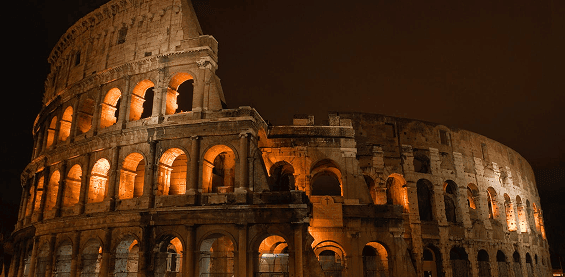
Evening Colosseum Tour
Reveal the secrets of Rome’s ancient past during an evening exploration of the Colosseum. Witness the gladiator’s arena at sunset, followed by a visit to the Imperial Forum and a glimpse of the iconic Trajan’s Column. As the sun sets and the crowds disperse, this tour offers an authentic VIP encounter, granting you after-hours admission. Embark on an extensive exploration guided by a seasoned local expert, delving into the Colosseum’s history while absorbing tales of its violent past. With the cooling ambiance of the evening and the arena illuminated against the night canvas, this experience transforms the iconic site into a captivating spectacle.
- 3hrs
- Rome
Why Book Colosseum Tours In Rome
Colosseum tours in rome employees only the best roman licensed tour guides
All rome colosseum tours include skip the line tickets
24-hour cancellation policy
Roman colosseum tours available in various languages
All payment methods available with instant confirmation
24/7 customer service – our team of rome experts are happy to help
Rome Colosseum Tours – FAQs
Colosseum tours are worth it if you have a good tour guide. Tours will enhance your Colosseum experience, providing historical information on the iconic arena and a journey back to ancient Rome. A Colosseum tour will also save you time with skip the line tickets which avoids the crowds entering the amphitheater.
There are various Colosseum guided tours options to visit the Colosseum, Roman Forum & Palatine Hill for all types of travelers and budgets.
Gladiator entrance colosseum arena floor tours
Colosseum underground and dungeons tours
Guided Colosseum tours usually take between 1 to 3 hours. This includes a Colosseum visit as well as the Roman Forum and Palatine Hill. Its recommended to explore the archeological areas after the tour end.
Colosseum walking tours vary in price depending on the type of tour you join. More exclusive tours of the Colosseum visit the underground or arena floor cost more. Private Colosseum tours are the most expensive option.
Touring the Colosseum alone is an option for those wishing to explore the arena without a guide. Audio guides are available for purchase inside the Colosseum. See Colosseum visiting tips.
The most complete and in demand tour of the Colosseum is the underground tour. The colosseum dungeon tours provide access to the all areas of the amphitheater, including the Colosseum Arena Floor, the underground tunnels and the top levels. Colosseum evening tours are also a favorite choice to avoid the crowds and heat. See the best Colosseum tours available to decide which is best for you.
We suggest you book Colosseum tickets online to avoid long lines and ensure entry, especially during peak tourist seasons.
All tours of the Colosseum include tickets to enter the Colosseum. Alternatively buy your colosseum ticket without a tour.
- Vatican Museum
- Trevi Fountain
- Pantheon
- Borghese Gallery
- Spanish Steps
- St. Peters Basilica
- Catacombs of Rome
Enhance Your Colosseum Experience
Explore the ancient amphitheatre, Roman Forum and Palatine Hill with an audio guide.

Colosseum Audio Guide
Audioguide available in English, Italian, French, German, Spanish, Portuguese, Chinese, Japanese, Korean, Arabic, Latin, Russian & Polish
Colosseum Ticket With Audio Guide Cost – € 23.50
Colosseum Tickets
Visit the Colosseum without the crowds
Purchase skip the line Colosseum tickets from the Colosseum official Website
Colossseum Ticket Cost – €19
Colosseum Opening Times
January 2 – February 15: 8.30 a.m – 3.30 p.m
February 16 – March 15: 8.30 a.m – 5.00 p.m
March 16 – March 28: 8.30 a.m – 5.30 p.m
March 29 – August 31: 8.30 a.m – 7.15 p.m
September 1 – September 30: 8.30 a.m – 7.00 p.m
October 1 – October 31: 8.30 a.m – 6.30 p.m
Novomber 1 – December 31: 8.30 a.m – 4.30 p.m
* The last admission to the colosseum is 1 hour prior to close
Colosseum Maximum Capacity
For security reasons, a maximum of 3000 people are allowed inside the Colosseum.
If the colosseum is at full capacity (which happens in the middle of the day during peak season), you will have to wait for people to exit regardless if you are a tickets holder or not.
History of the Colosseum
The Colosseum, also known as the Flavian Amphitheatre, is one of the most iconic symbols of ancient Rome and has a fascinating history dating back nearly 2,000 years. Here’s a breakdown of its history, from construction to modern-day legacy:
- Commissioned by Emperor Vespasian: Construction of the Colosseum began in AD 70 under Emperor Vespasian, founder of the Flavian Dynasty, as part of his efforts to restore Roman pride and unity after the civil wars.
- Funded by Spoils of War: The construction was financed largely by spoils from the Roman victory in the Jewish-Roman Wars, specifically from the Siege of Jerusalem in AD 70.
- Innovative Design: Built largely from limestone, tuff, and concrete, the Colosseum is an architectural marvel of the ancient world, utilizing the Roman arch and innovative construction techniques that allowed it to be completed in only 10 years.
- Opening in AD 80: The Colosseum was inaugurated by Vespasian’s son, Emperor Titus, with 100 days of games, including gladiatorial combats, wild animal hunts, and even simulated naval battles by flooding the arena.
- Gladiatorial Combat: The Colosseum is best known for its brutal gladiator fights. Gladiators were often slaves or prisoners of war trained to entertain Roman citizens through hand-to-hand combat.
- Animal Hunts (Venationes): The arena hosted staged hunts with exotic animals, including lions, bears, and elephants, brought from the far reaches of the Roman Empire.
- Mock Sea Battles (Naumachiae): Engineers devised systems to flood the Colosseum to host naval battle reenactments, though this practice was rare due to logistical challenges.
- Public Executions and Myths: While executions were part of the entertainment, the idea that Christians were frequently martyred here is largely a myth; most executions occurred elsewhere in the city.
- Capacity and Spectator Experience: The Colosseum could hold 50,000 to 80,000 spectators, with seating carefully arranged by social class, showcasing the rigid Roman social hierarchy.
- Changing Tastes and Priorities: By the 5th century, public tastes had shifted, and financial strain on the Roman Empire made costly games unsustainable.
- Severe Earthquakes: In AD 217 and again in the 5th century, significant earthquakes damaged the Colosseum, collapsing part of the southern wall and ending large-scale use.
- Gradual Abandonment: By the 6th century, the Colosseum had largely fallen out of use, with its stone being repurposed for building projects, including St. Peter’s Basilica.
- A Medieval Fortress: By the early medieval period, the Colosseum was repurposed as a fortress by the powerful Frangipani family, contributing to the structure’s survival during these turbulent centuries.
- Source of Building Materials: The Colosseum served as a quarry for Roman builders, supplying stone and marble for churches and palaces during the Renaissance.
- Papal Efforts at Preservation: In the 18th century, Pope Benedict XIV declared the site sacred to the Christian martyrs believed to have died there and took steps to protect it from further pillaging.
- Preservation and Restoration: Several popes, beginning with Pope Benedict XIV, led restoration efforts to stabilize and preserve the Colosseum as an architectural treasure.
- World Heritage Site and Tourist Icon: Today, the Colosseum is a UNESCO World Heritage Site and one of the New Seven Wonders of the World, attracting millions of tourists every year.
The Colosseum Design
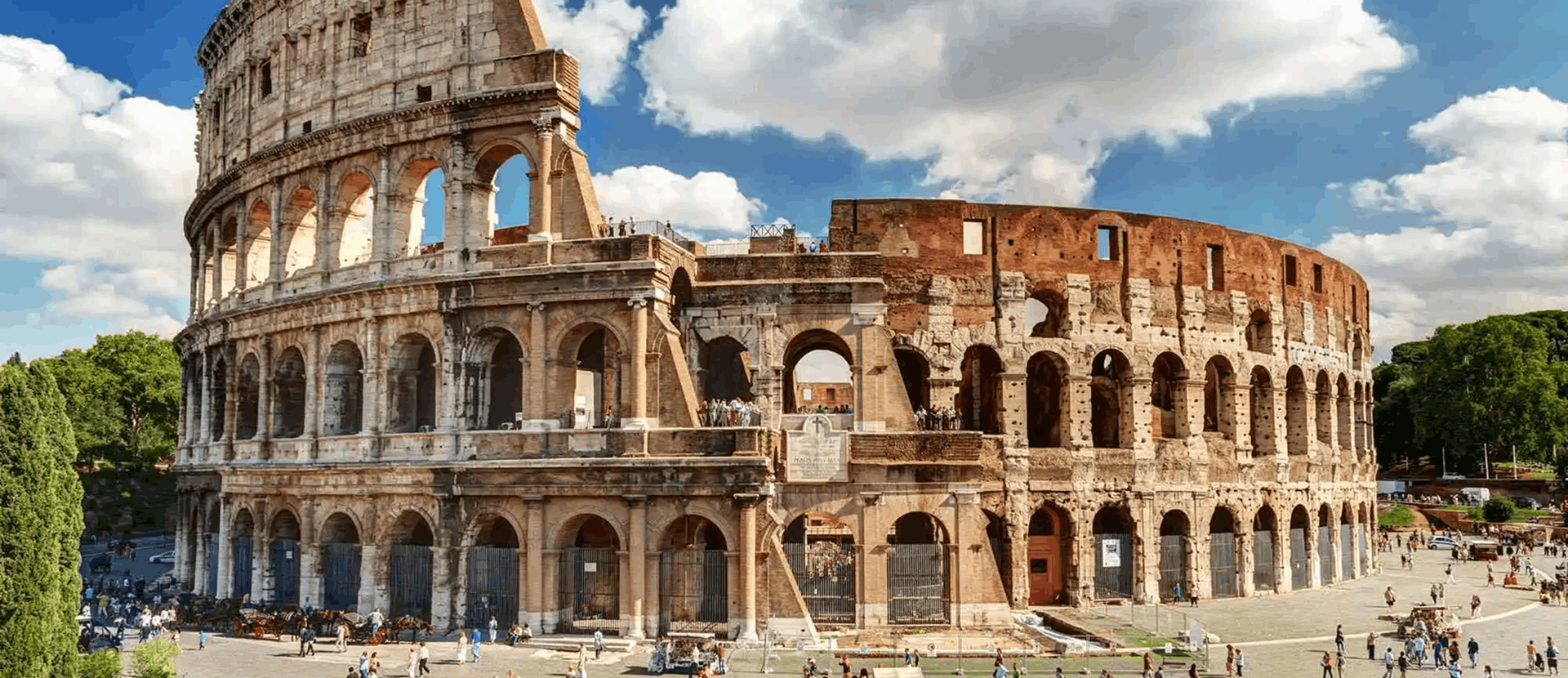
The design of the Colosseum, or the Flavian Amphitheatre, is a masterpiece of ancient Roman architecture, known for its imposing scale and sophisticated engineering. Built between 70-80 AD under the emperors Vespasian and Titus, it is one of the most iconic examples of Roman design and engineering. Here’s a breakdown of the Colosseum’s key design features:
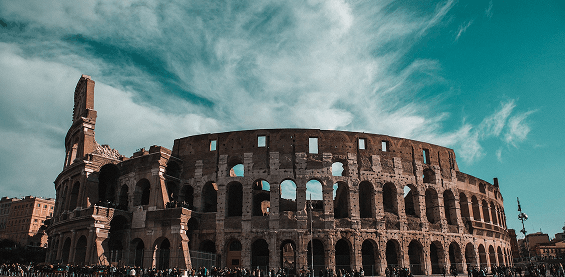
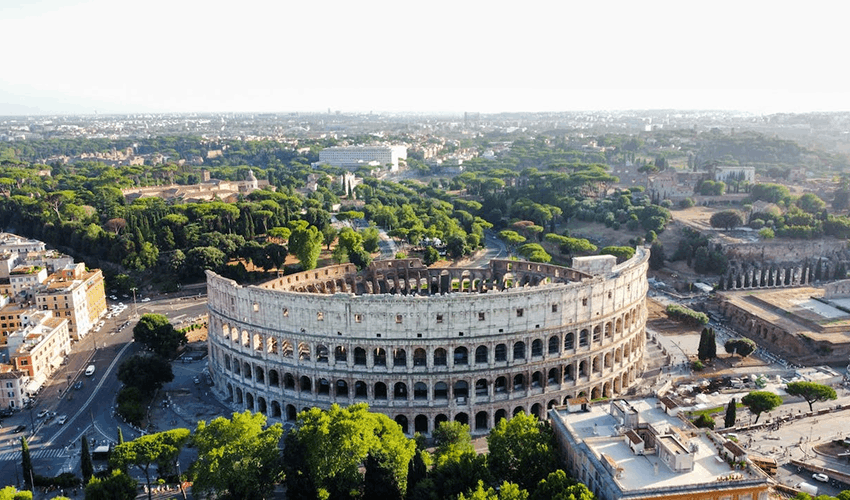
- Elliptical Shape: The Colosseum is oval-shaped stadium with a length of 189 meters (620 feet), a width of 156 meters (512 feet), and a height of 48 meters (157 feet). The shape helped distribute the weight of the massive structure evenly, allowing large crowds to enter and exit the stadium smoothly.
- Tiered Seating: The Colosseum had four main tiers, accommodating around 50,000 to 80,000 spectators. These tiers reflected Roman social hierarchy, with senators and important citizens sitting closest to the arena and the common people in the higher tiers.
- Vomitoria: Designed to allow large crowds to enter and exit quickly, the Colosseum’s “vomitoria” were large passageways and staircases that made it possible to empty the entire structure within minutes.
- Concrete and Travertine: The Romans used a combination of concrete, travertine stone, tuff, and brick-faced concrete. Travertine blocks were held together by iron clamps without mortar.
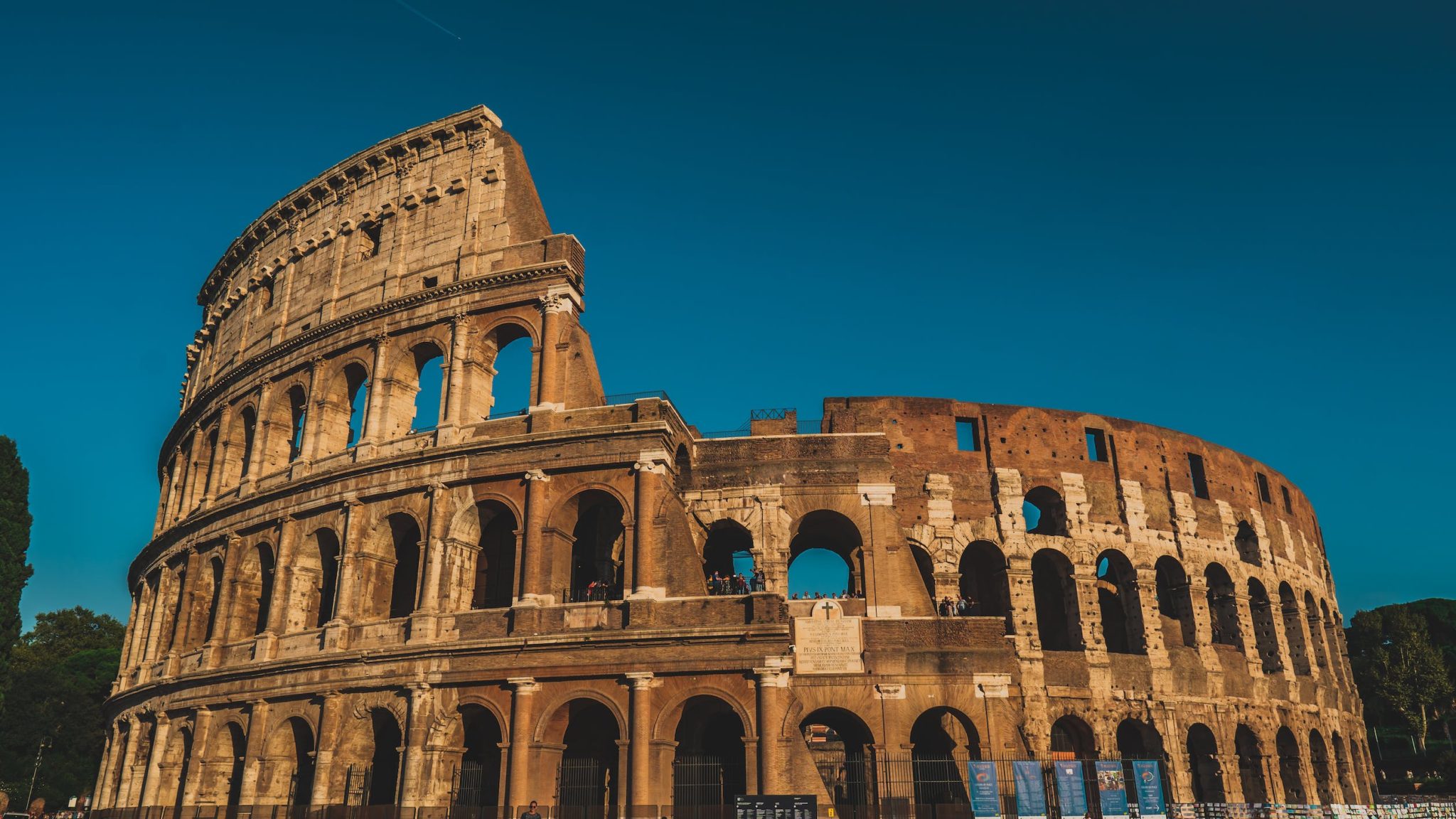
- Arches and Vaults: The Colosseum’s structural integrity relied on a complex system of arches and vaults. The outer wall features three levels of arches, with each tier decorated by columns in different classical orders (Doric on the first, Ionic on the second, and Corinthian on the third).
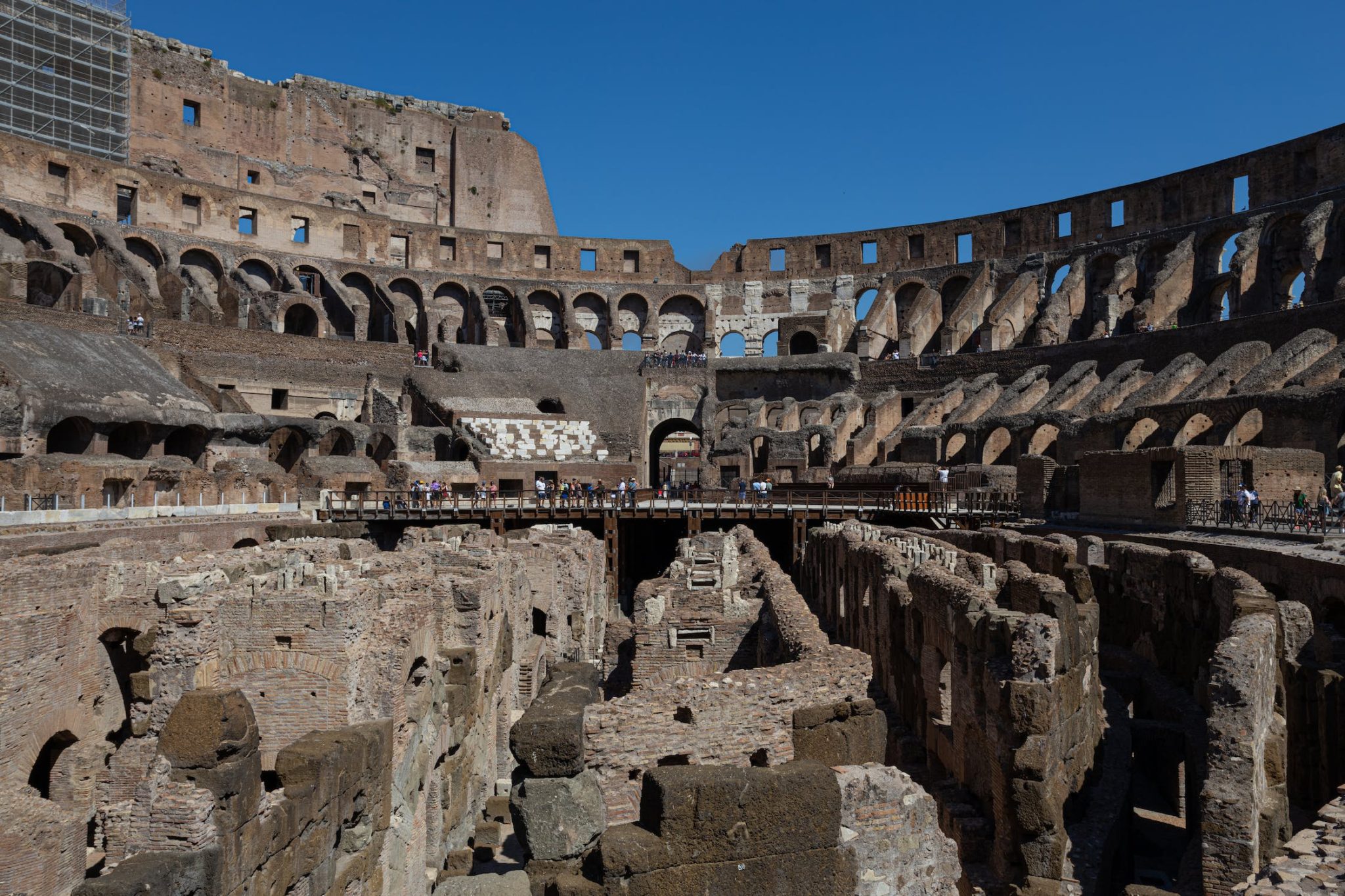
- Hypogeum: Beneath the arena floor was a complex underground structure called the hypogeum. This area had cages, tunnels, and lifting mechanisms to bring gladiators and animals directly into the arena.
- Columns and Facades: The exterior included a series of engaged columns with decorative capitals that showcased the three classical orders. Statues were likely placed in arches on the second and third levels.
- Retractable Velarium: The Colosseum featured an awning system known as the velarium, which was made of sailcloth and could be extended to protect spectators from the sun and rain. This canopy was supported by a network of ropes and poles, making it an early example of stadium shading.
- The Colosseum’s design facilitated its function as a multi-purpose entertainment venue, hosting gladiatorial contests, animal hunts, reenactments of famous battles, and dramas.
- It was a symbol of Rome’s wealth, power, and architectural prowess and served as a place for social cohesion where people from all social classes could gather.
Colosseum Tours in Rome Recommended By