Colosseum FAQ’s
Colosseum Facts
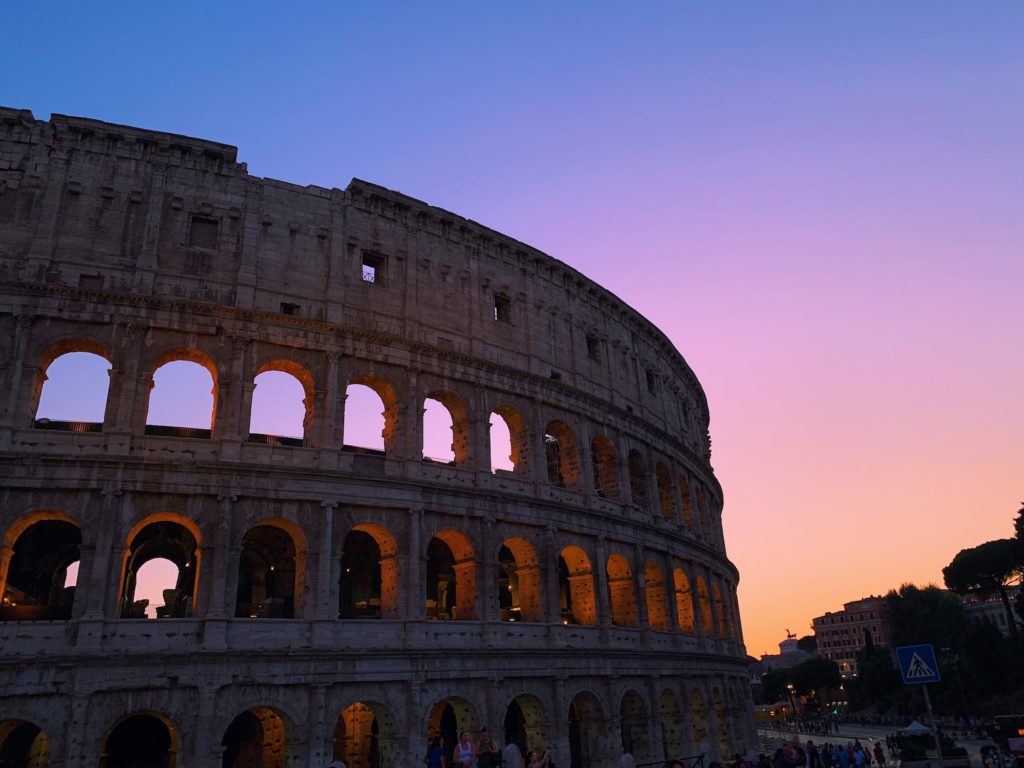
The Colosseum is an ancient amphitheater situated in the heart of Rome.
The construction of the Colosseum was initiated in 72 AD, and it reached completion in 80 AD.
The Colosseum was erected to serve as the venue for diverse public spectacles, including gladiatorial contests, animal hunts, and simulated sea battles. These events were orchestrated to entertain the public and to showcase the might and power of the Roman Empire.
The term “Colosseum” was assigned to the structure much later in history. The official name of the Colosseum is the Flavian Amphitheater, named in honor of Emperor Vespasianus Flavius. Despite his passing prior to its completion, his son carried on to finalize the colossal stadium, and thus, the name Flavius or Flavian persisted.
The construction of the Colosseum was instigated during the reign of Emperor Vespasian, though he passed away prior to its culmination. His two sons, Emperors Titus and Domitian, brought the construction to completion. The actual work was predominantly carried out by Jewish slaves under the supervision of Roman engineers and craftsmen.
Tens of thousands of Jewish slaves brought to Rome by Emperor Vespasian were responsible for building the Colosseum. The construction spanned nearly a decade, with completion achieved in AD 80.
The Colosseum’s foundation rests upon an artificial lake that was drained to make way for the amphitheater. This lake was an integral part of Nero’s Golden House, which was dismantled to pave the path for the Colosseum.
The inaugural games held at the Colosseum took place between 80 AD and 81 AD.
Following their triumph in the initial Jewish-Roman war, the Jewish Temple of Jerusalem was sacked, and many inhabitants of the region were enslaved. Transported to Rome, these individuals are estimated to have numbered between 60,000 and 100,000, partaking in the construction of the Colosseum.
Contrary to common assumptions, the Colosseum was erected in just 8 years. While Titus inaugurated the stadium after 8 years, additional construction was required before its finalization. Domitian, his brother, completed the work, albeit after the demise of Titus, requiring an additional 2 years. Altogether, this renders a construction period of 10 years—a truly remarkable feat.
Following the extensive fire of 64 AD that ravaged a substantial portion of the city, Emperor Nero commissioned the creation of a magnificent palace, the Domus Aurea, in the devastated area. The citizens of Rome expressed their discontent with this palace. Upon Nero’s dethronement and Emperor Vespasian’s ascent, the latter ordered the dismantling of Nero’s palace complex and the construction of the Colosseum on the site, previously occupied by an artificial lake. The Colosseum was intended to serve as a grand amphitheater, catering to the entertainment of all Roman citizens.
Originally known as the Flavian Amphitheatre, the Colosseum’s name reflects its construction by Emperors Vespasian, Titus, and Domitian, all from the Flavian dynasty. The name “Colosseum” likely draws from the colossal bronze statue of Emperor Nero positioned adjacent to the edifice. This statue itself was modelled on the Colossus of Rhodes.
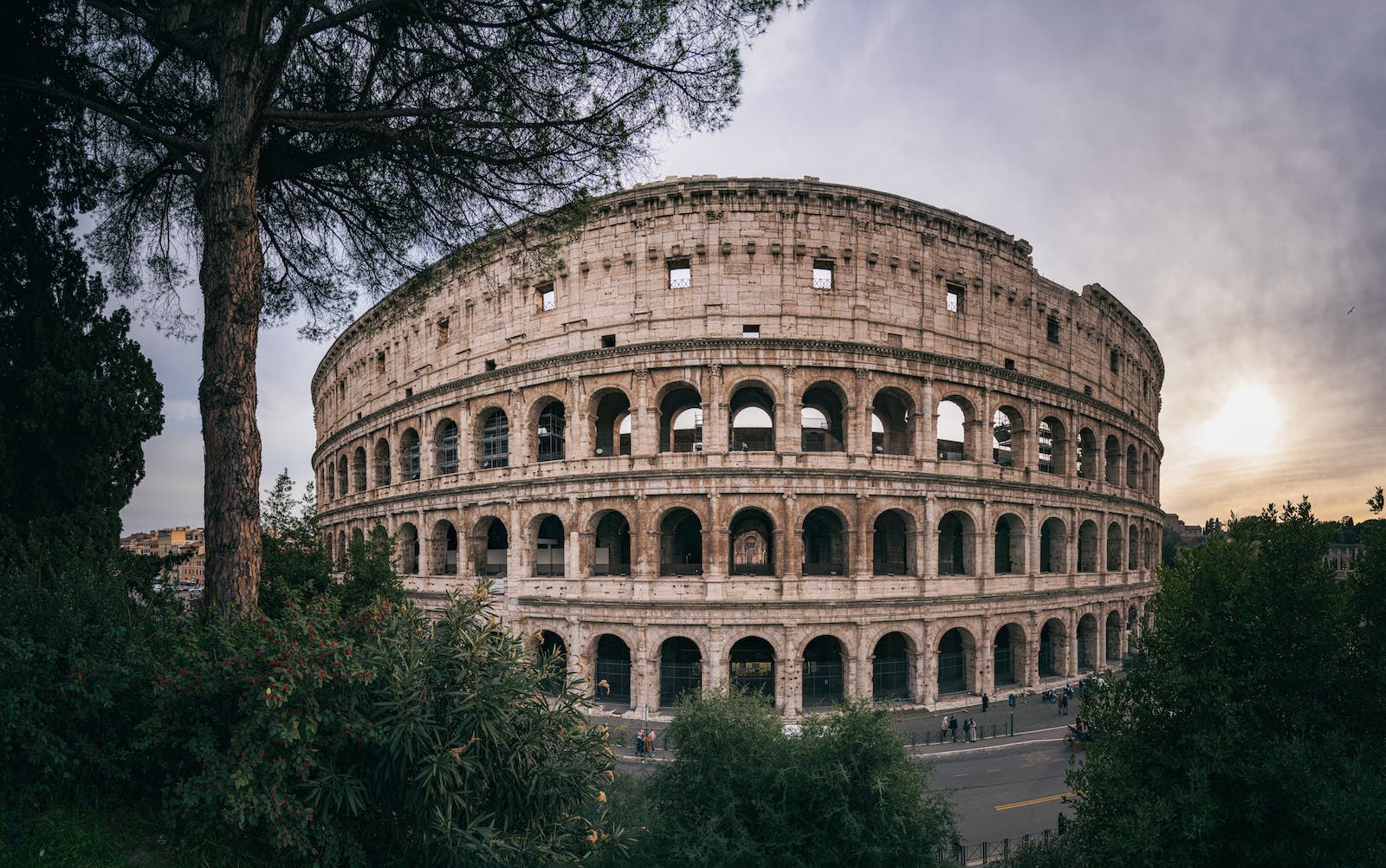
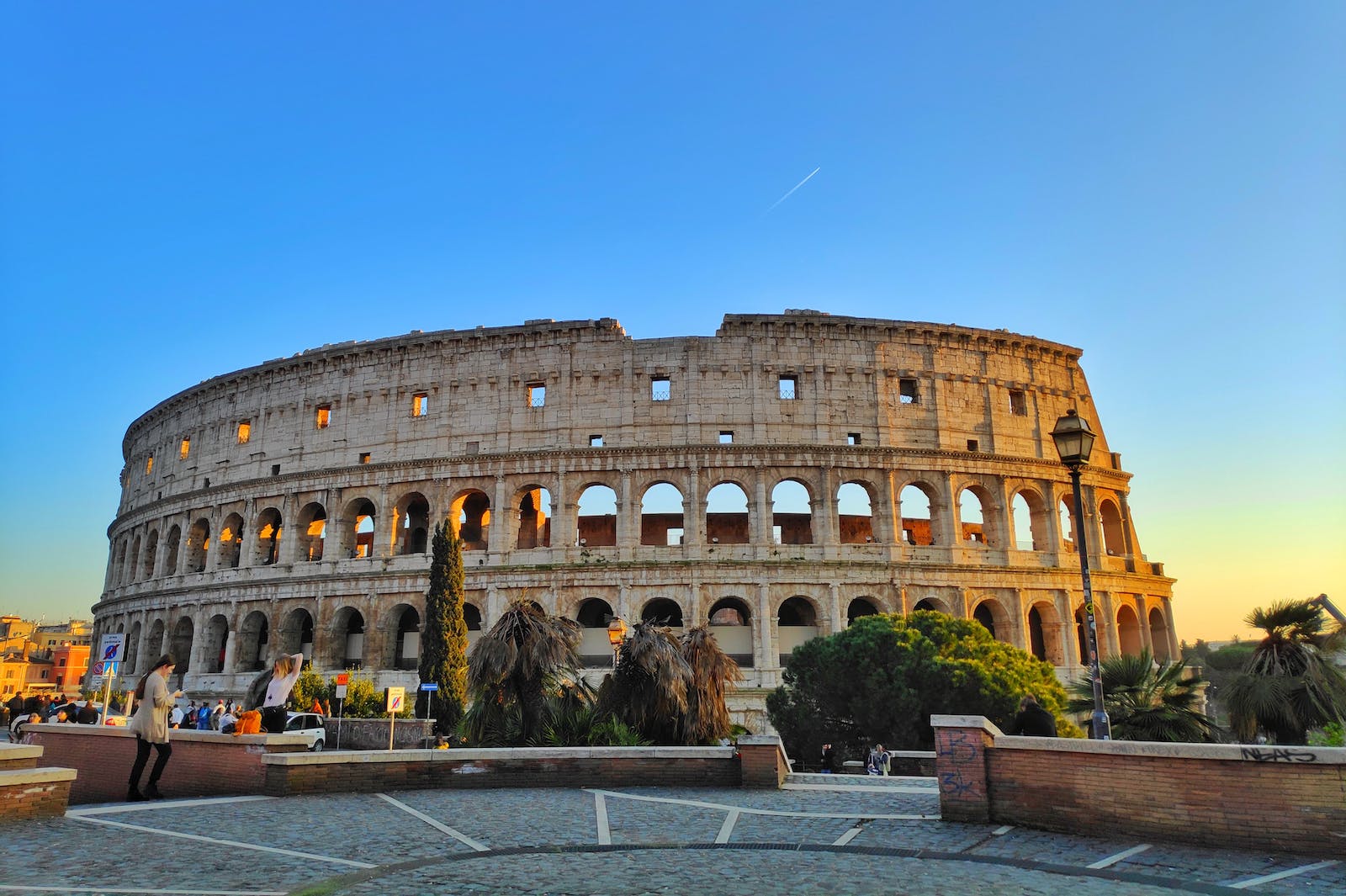
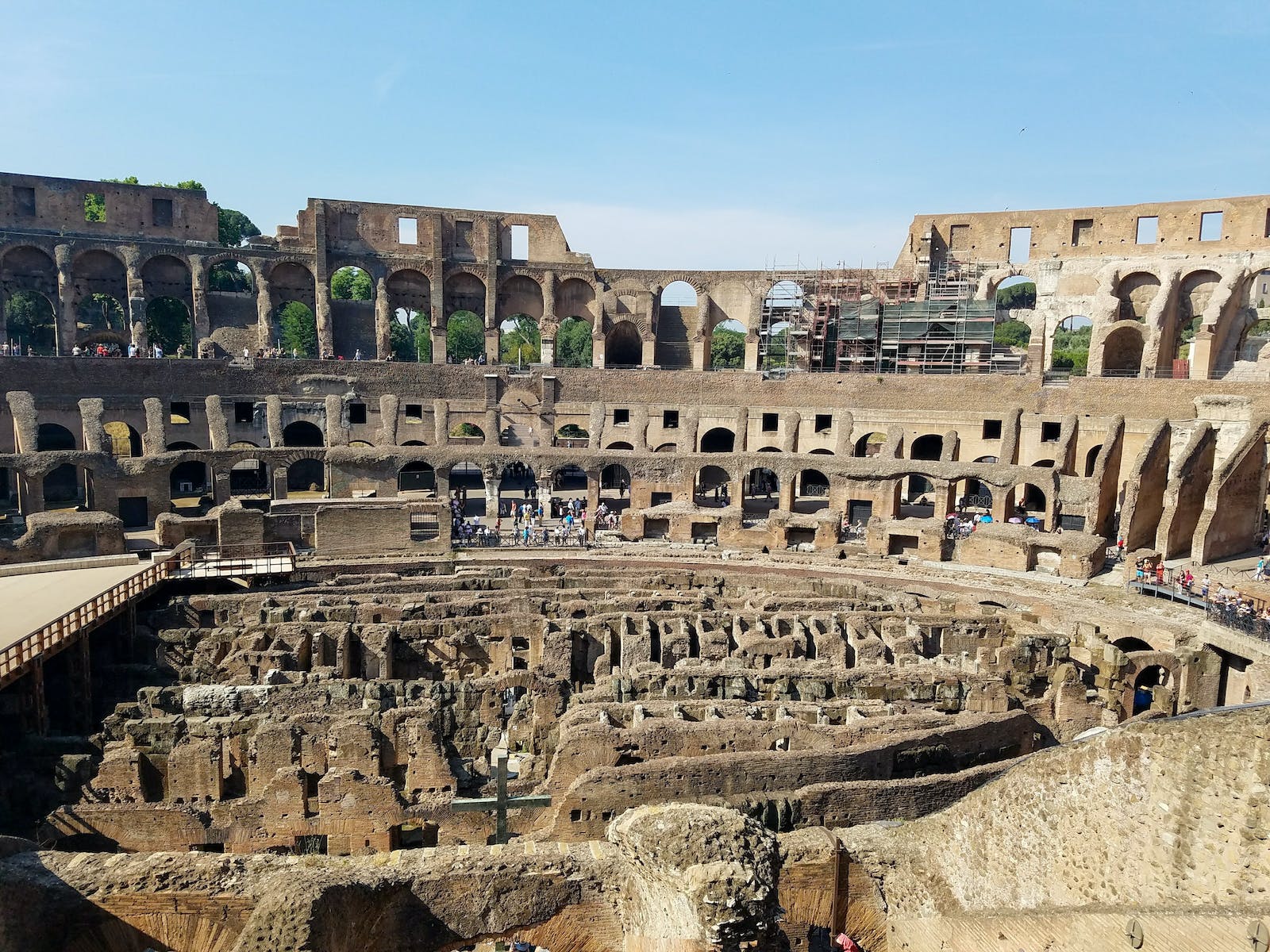
The Colosseum boasts an elliptical structure with dimensions of 189 meters in length, 156 meters in width, and a height of 48.5 meters. The overall surface area of the building encompasses 6 acres.
Travertine stone, estimated at approximately 100,000 cubic meters, forms the foundation of the Colosseum, sourced from quarries in Tivoli, situated 20 miles away from Rome.
Originally adorned with marble, the Colosseum relinquished much of this material over time to contribute to the construction of other edifices. However, traces of this marble linger on the uppermost tier of the Colosseum.
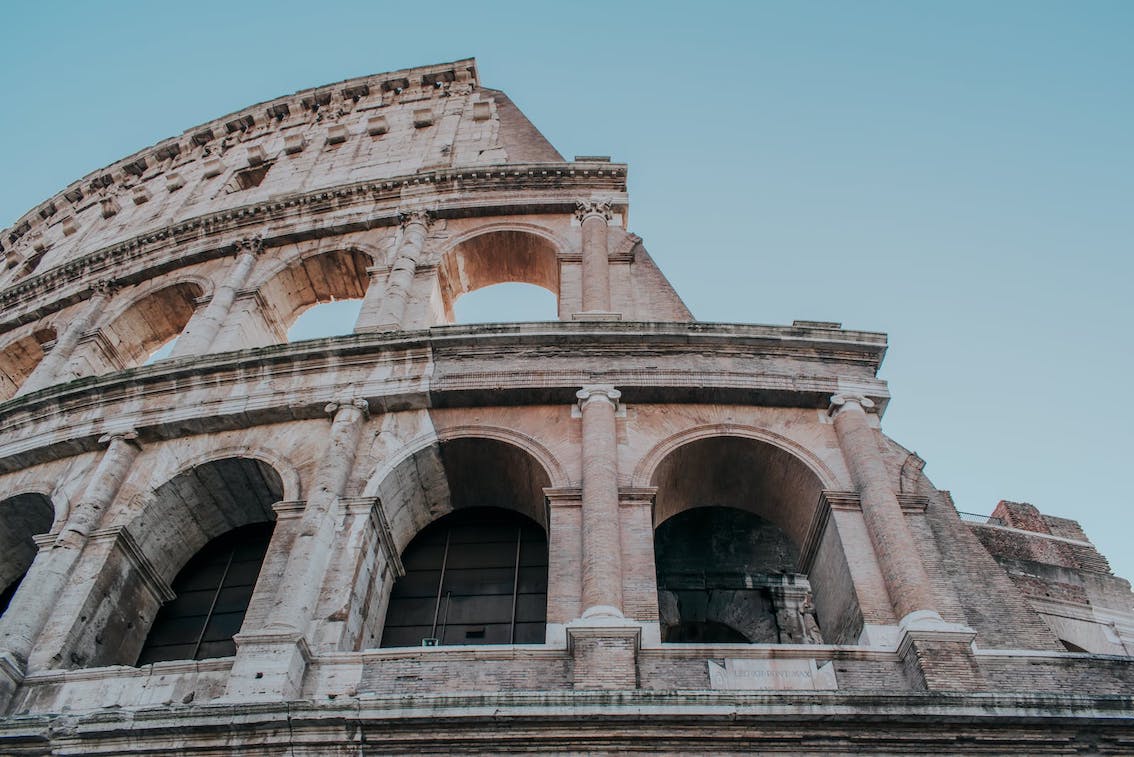
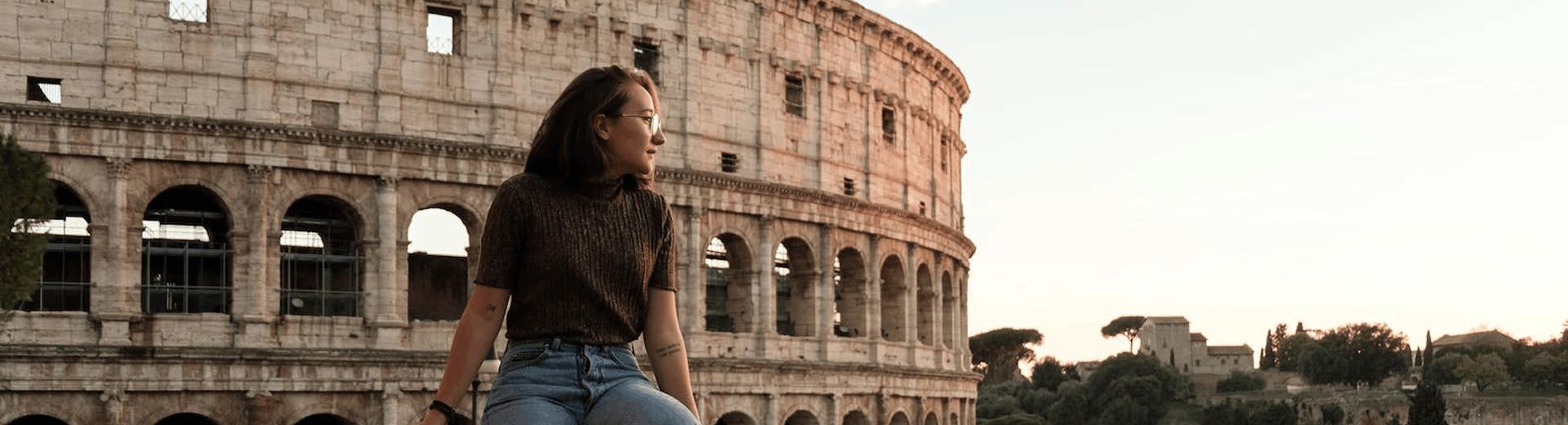
Adorning the outer walls of the Colosseum are three tiers of columns featuring Doric, Ionic, and Corinthian styles. Each tier comprises 80 arches. Of these, 76 are distinguished by Roman numerals, visible atop them in certain locations. These markings served as guides for spectators to locate their designated seating areas. While 80 ground-level arches once existed, only 31 remain intact today, constituting what modern visitors observe.
The Colosseum was equipped with a retractable canopy known as the velarium, constructed from canvas, which extended across the entire seating area. This mechanism served to shield spectators from the elements, be it sunlight or rain, during various events.
The Colosseum encompasses the Hypogeum, an underground complex. This elaborate network encompasses tunnels and chambers where gladiators, animals, and prisoners were held before entering the arena. An intricate system of 80 vertical shafts enabled direct access from the hypogeum to the arena. Trap doors were strategically placed for deploying scenery during spectacles.
The Colosseum’s seating could accommodate between 50,000 and 80,000 spectators, rendering it the largest amphitheatre ever built. It was a venue for an array of events, including gladiator battles, animal hunts, and public executions.
Numerous species of animals were engaged in the activities at the Colosseum. Some were involved in staged hunts, orchestrated by armed and trained humans who would bring down these creatures. Others served as “executioners” for individuals condemned to die in the arena. Lions, tigers, wolves, bears, leopards, wild boar, elephants, hyenas, buffalos, hippopotamuses, crocodiles, and giraffes were all showcased within the Colosseum at various points.
While exact figures remain elusive, it is estimated that up to 400,000 individuals, comprising gladiators, slaves, convicts, prisoners, and various entertainers, perished within the Colosseum. This occurred over its approximately 350-year tenure as a platform for bloodsports and exhibitions.
Although pinpointing an exact figure is elusive, considering accounts describing hunts, spectacles, and estimations based on the number of events held, it is believed that the count could range into the millions. While unconfirmed, it is suggested that the Colosseum played a role in the extinction of certain animal species in nearby regions.
While the most prevalent and recognisable events were gladiator battles, the Colosseum also hosted staged hunts, executions (including the famed “damnatio ad bestias” involving wild beasts), and initially, a few Naumachia — naval battles enacted in a controlled flooding of the Colosseum.
The Colosseum’s Use in Nautical Battles
Beyond animal hunts and gladiator clashes, the Colosseum was employed for staged nautical battles. The arena would be submerged in water, facilitating clashes between ships.
Contrary to the popular notion of chaotic and brutal free-for-alls, gladiator fights bore resemblance to contemporary boxing matches. Fighters were categorised based on size and fighting style, with referees and medical personnel overseeing the bouts. Not all matches resulted in death. Fight pairings were determined by experience, records, and styles of the fighters. Successful gladiators could even achieve celebrity status. While not devoid of bloodshed, these contests were less tumultuous than commonly imagined. Nonetheless, a significant number of gladiators did meet their demise in the arena.
While a considerable number of individuals met their end within the Colosseum over the years, including Christians, concrete historical evidence linking Christian martyrdom to the Colosseum remains lacking.
The events depicted in the movie “Gladiator” blend fact and fiction. Commodus was indeed a historical Roman Emperor with an affinity for gladiatorial combat and bloodsports, sometimes participating in fights himself. However, his opponents were often handicapped, incapacitated, or non-predatory animals. His sadistic displays led to public disdain, potentially contributing to his eventual downfall. Nevertheless, he did not meet his demise in a heroic gladiator battle as depicted in the movie.
Formally, gladiators were not slaves, but in practice, they were treated as such. They belonged to the “infame” class, and upon becoming gladiators, either willingly or as punishment, they forfeited their rights, becoming the property of their owners with their lives in the balance.
The precise date is uncertain, but records of gladiator battles extend to around the year 435. After gladiator contests ceased, hunts continued in the Colosseum for roughly another century.
The Colosseum’s utilization spanned over 500 years, from its establishment in AD 80 until the 6th century AD. After the decline of the Roman Empire, the Colosseum served various purposes, including functioning as a cemetery and fortress.
Contrary to popular belief, the decline of gladiator fights was not primarily driven by the Empire’s shift toward Christianity. Rather, cost played a pivotal role. By the 5th century, the Colosseum had deteriorated, the Roman Empire was in decline, and the resources needed to maintain the structure, support gladiators, and provide animals became scarce.
The Colosseum endured significant fires on at least three occasions throughout its history and suffered from no fewer than four earthquakes. These events inflicted substantial damage on the structure, necessitating multiple rounds of repairs and reconstruction over its two-thousand-year existence.
Following the collapse of the Roman Empire, the Colosseum fell into neglect and abandonment. It became a source of building materials for various constructions in Rome and suffered further damage from earthquakes. However, subsequent restoration efforts have revived its prominence, making it a renowned tourist attraction.
After its role as a combat and hunting venue waned, the Colosseum found diverse applications across different historical periods. These include functioning as a cemetery, a place of worship, housing, workshops for artisans and merchants, a religious order’s residence, a fortified castle, and most recently, a popular tourist destination.
The Colosseum welcomes over 4 million visitors each year, earning its distinction as the premier attraction in Italy and one of the world’s most sought-after destinations.
The Colosseum has left an indelible mark on pop culture, frequently appearing in movies like “Gladiator,” featuring actors Russell Crowe and Joaquin Phoenix, as well as unexpected films such as “The Lizzie McGuire Movie,” starring Hilary Duff and Adam Lamberg. The Colosseum has also hosted performances by renowned artists like Elton John, Paul McCartney, Ray Charles, and Billy Joel.
The widespread thumbs-up gesture finds its origin in the Colosseum. This gesture signified that a gladiator was to be executed via the jugular. Deceased gladiators would be carried out through the western exit, which earned the moniker “Gate of Death.”